
Running a small business involves much more than selling products or services. You also need to keep track of income, expenses, invoices, payments, bank transactions, and financial records. That is where bookkeeping services for small businesses can make a significant difference. Professional bookkeeping helps keep your financial records organized and up to date, giving you a clearer picture of how your business is performing while making accounting and tax preparation easier.
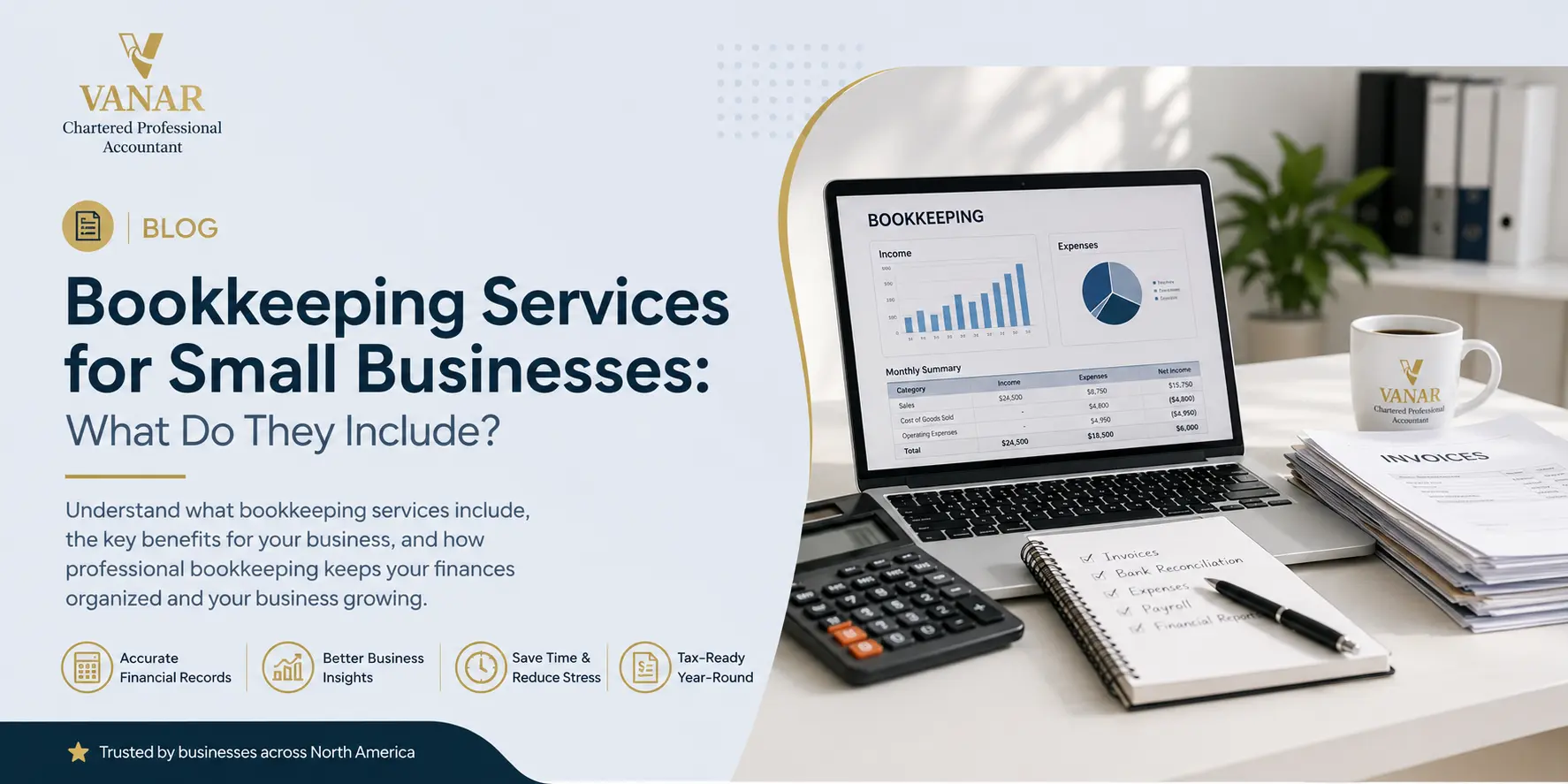
But what exactly does a bookkeeping service include? And does your small business actually need one?
Let’s take a closer look.
What Is a Bookkeeping Service?
A bookkeeping service helps businesses maintain accurate and organized financial records.
While the exact services can vary depending on the business and provider, bookkeeping generally involves recording and organizing financial transactions so that the business has reliable financial information.
A bookkeeper may help track:
- Sales and business income
- Business expenses
- Payments received
- Bills and payments made
- Bank transactions
- Invoices
- Accounts receivable
- Accounts payable
- Payroll-related records
- Business assets and liabilities
Good bookkeeping gives business owners a reliable financial foundation for making decisions and working with their accountant.
What Do Small Business Bookkeeping Services Include?
The specific services included depend on the business’s needs, but professional bookkeeping commonly covers several important areas.
1. Recording Financial Transactions
One of the fundamental responsibilities of bookkeeping is recording your business’s financial transactions.
This can include sales, purchases, expenses, payments, and other transactions affecting your business finances.
Keeping these records consistently updated makes it much easier to understand where your money is coming from and where it is going.
2. Bank Reconciliation
Bank reconciliation involves comparing your business’s financial records with your bank statements.
The purpose is to identify discrepancies, missing transactions, duplicate entries, or other inconsistencies.
Regular reconciliation can help ensure that your books accurately reflect what has actually happened in your business bank accounts.
3. Accounts Receivable
If your business invoices customers, bookkeeping may include tracking accounts receivable.
This means keeping track of:
- Outstanding invoices
- Payments received
- Amounts customers still owe
- Overdue invoices
Having organized accounts receivable records can help you understand your outstanding revenue and maintain healthier cash flow.
4. Accounts Payable
Bookkeeping can also involve tracking the money your business owes to suppliers, contractors, and other vendors.
This may include recording bills, monitoring payment due dates, and keeping track of payments made.
Organized accounts payable records can help prevent missed payments and give you a clearer view of upcoming financial obligations.
5. Expense Tracking
Business expenses can quickly become difficult to manage when records are scattered across bank accounts, receipts, emails, and spreadsheets.
A professional bookkeeping service can help categorize and organize business expenses throughout the year.
This can make it easier to understand your operating costs and provide your accountant with organized financial records when it is time to prepare your taxes.
6. Financial Reports
Depending on the bookkeeping package, you may receive regular financial reports that help you understand how your business is performing.
Common reports can include:
- Profit and loss statements
- Balance sheets
- Cash flow information
- Accounts receivable reports
- Accounts payable reports
These reports can turn your bookkeeping records into information that is actually useful for running your business.
Why Is Bookkeeping Important for Small Businesses?
Many small business owners focus heavily on sales and operations and leave their financial records until tax season.
That can create unnecessary stress.
When bookkeeping is maintained throughout the year, you have a much clearer picture of your business finances.
Good bookkeeping can help you:
Understand Your Cash Flow
Knowing how much money is coming into and leaving your business can help you make better spending and planning decisions.
Monitor Business Performance
Regular financial reports can help you identify whether revenue is increasing, expenses are rising, or profit margins are changing.
Prepare for Tax Filing
Organized bookkeeping can make tax preparation much easier because your income and expenses have already been recorded and categorized.
Make Better Business Decisions
Financial information can help you decide when to hire, invest, reduce expenses, increase prices, or make other important business decisions.
Save Time
Instead of spending hours trying to reconstruct months of transactions, you can focus on running your business while your financial records are maintained consistently.
Bookkeeping vs. Accounting: What’s the Difference?
Bookkeeping and accounting are closely related, but they are not exactly the same.
Bookkeeping primarily focuses on recording, organizing, and maintaining financial transactions and records.
Accounting generally involves interpreting and analyzing financial information, preparing financial statements, supporting tax requirements, and using financial data to help with planning and decision-making.
In simple terms:
Bookkeeping records what happened. Accounting helps you understand what it means.
Many small businesses benefit from having both functions working together.
How Often Should a Small Business Do Its Bookkeeping?
There is no single schedule that works for every business.
Some businesses may benefit from weekly bookkeeping, while others may only require monthly services.
The right frequency depends on factors such as:
- Number of transactions
- Business size
- Number of employees
- Sales volume
- Number of bank accounts
- Accounts receivable
- Accounts payable
- Industry
- Financial complexity
For businesses with frequent transactions, maintaining the books regularly can make it much easier to monitor cash flow and identify issues early.
Signs Your Business Needs Professional Bookkeeping
You may benefit from professional bookkeeping services if:
- Your books are consistently behind
- You are mixing personal and business transactions
- You are unsure how profitable your business is
- You have difficulty tracking outstanding invoices
- Your expenses are not properly organized
- Tax season becomes stressful every year
- You spend too much time maintaining spreadsheets
- You have recently started hiring employees
- Your business has grown significantly
- You want better financial information for decision-making
You do not necessarily need to wait until your bookkeeping becomes overwhelming before getting help.
Setting up an organized bookkeeping system early can make growth much easier to manage.
Can Bookkeeping Help With Tax Preparation?
Yes. One of the biggest advantages of maintaining organized books is that it can make tax preparation more efficient.
When your business income and expenses are properly recorded throughout the year, your accountant has a clearer set of financial records to work with.
This can reduce the amount of time spent searching for receipts, reconstructing transactions, or determining where money was spent.
Bookkeeping and tax services can therefore work together as part of a broader financial management system for your business.
Should You Do Your Own Bookkeeping or Hire a Professional?
Some small businesses can manage their own bookkeeping, particularly when they have relatively few transactions and straightforward finances.
However, doing your own books also comes with a cost: your time.
As your business grows, bookkeeping can become increasingly time-consuming.
A professional bookkeeping service can take responsibility for maintaining your financial records while giving you access to organized information about your business.
For many business owners, the question is not simply whether they can do their own bookkeeping, but whether doing it themselves is the best use of their time.
How to Choose a Bookkeeping Service
Before choosing a bookkeeping provider, consider:
Experience With Small Businesses
Look for a provider that understands the financial needs and challenges of small businesses.
Services Offered
Make sure the service includes the bookkeeping tasks your business actually needs, rather than paying for services you will never use.
Communication
Your bookkeeper should be accessible and able to explain financial information clearly.
Technology
Ask which accounting and bookkeeping systems they use and how you will share documents and financial information.
Integration With Accounting and Tax Services
A bookkeeping provider that can work closely with your accountant or provide accounting and tax services can make financial management more seamless.
Final Thoughts
Bookkeeping services for small businesses are about much more than simply recording transactions.
Well-maintained books give you a clearer understanding of your business finances, help you monitor cash flow, make accounting and tax preparation easier, and provide useful information for making business decisions.
Whether you are a new entrepreneur or an established small business, having organized financial records can give you greater confidence in your numbers.
If maintaining your books is taking time away from running your business, professional bookkeeping may be worth considering.
Vanar CPA Inc. provides bookkeeping, accounting, and tax services for individuals, entrepreneurs, and growing businesses in Surrey and surrounding communities. With professional support, you can keep your financial records organized while focusing more of your time and attention on growing your business.